
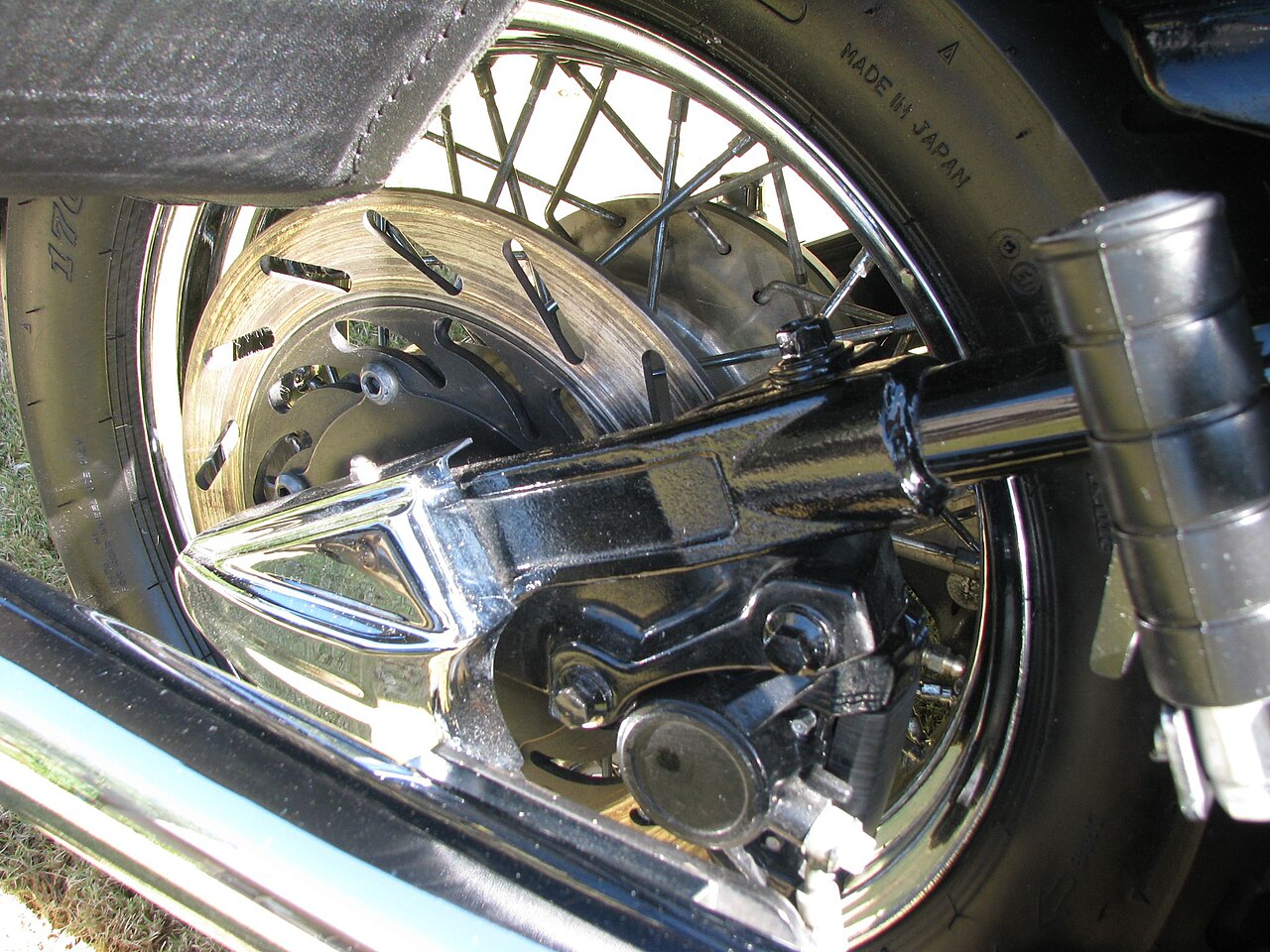
Real motorcycle rear tire and wheel close-up. Photo: Public Domain Images · Public domain. Display crop applied where relevant.

A tire can look healthy and still deserve closer inspection. Age, inflation, damage and the specifications printed on the sidewall all matter — and a shiny bike with deep tread is not a substitute for checking them.
Read the manufacture date
On motorcycle tires with a DOT date code, the final four digits identify the production week and year. A code ending in 2423 means the 24th week of 2023. It is a manufacturing date, not an expiration date or an instruction to ride for a fixed number of years.
Michelin advises annual professional inspection after five years of use and replacement by ten years after manufacture regardless of remaining tread. That is manufacturer guidance, not a universal statutory rule, and inspection findings or damage can justify replacement much sooner.
The sidewall maximum is not the pressure to ride on
The maximum pressure molded into a tire is not automatically the correct cold riding pressure for your motorcycle. For normal road use, the motorcycle maker’s owner’s manual or vehicle label is the starting point, accounting for load and sometimes passenger or luggage conditions.
Michelin advises regular cold-pressure checks and says never to bleed down a hot tire to match the cold figure. Heat raises pressure as a tire is ridden. Removing air because a hot reading looks high can leave it underinflated when it cools.
Size markings describe a system
A marking such as 190/55 R17 includes nominal width, sidewall aspect ratio, radial construction and rim diameter. The rest of the sidewall provides information about load and speed capability, direction and whether the tire is designed for tube or tubeless application.
Changing tire type or dimensions affects more than appearance. A wider rear can alter steering behavior or clearance, and an incompatible tube/rim combination may introduce serious safety problems. Confirm compatibility with the bike and wheel rather than assuming anything that fits physically is safe.
Look at the entire tire, not one groove
Check tread wear indicators, sidewall cracking, bulges, cuts, punctures and unusual wear patterns. Sudden changes in handling should prompt a closer look at tire condition and pressure as well as suspension and wheel condition.
A tire repaired after a puncture requires manufacturer-approved inspection and methods. Sidewall damage is not a home repair project. If there is doubt, have a qualified motorcycle tire specialist examine it.
Before the next long run
Record tire sizes, recommended cold pressures for the intended load, manufacture dates and recent inspection findings. A small note in a phone or service record is more useful than guessing in a motel parking lot on the morning of a long interstate ride.
Sources and methodology
This article is based on public source documents and editorial analysis, not a claimed first-hand road test or unpublished interview.
- Michelin Canada — Reading a Motorcycle Tire
- Michelin Canada — Tire Replacement
- Michelin Canada — Tire Pressure
Research desk · Biker Free Press · Reviewed November 15, 2026. Verify time-sensitive requirements at the original source.