RIGHTS DESK / ORIGINAL SOURCE ANALYSIS / NOVEMBER 2026
A club back patch may communicate identity, affiliation, loyalty or a point of view without a word spoken. Whether government can lawfully restrict a particular emblem is a serious legal question, and the Canadian Charter offers a starting point — not an automatic answer.
Section 2(b) starts with meaning
The Department of Justice’s Charterpedia explains that section 2(b) generally protects acts or communications intended to convey meaning. The Supreme Court’s test asks whether expressive content exists, whether method or location affects protection, and whether government action limits expression in purpose or effect. A patch or other symbol may raise this inquiry, but the conclusion depends on the facts and the measure.
A symbol can have more than one meaning to different audiences. A government description of a logo does not, by itself, resolve every member’s intended expression. Nor does the member’s interpretation necessarily determine how a court evaluates a restriction.
What section 2(d) adds
Freedom of association is independently protected by section 2(d). Membership, collective pursuits and expression can overlap in a club. The Supreme Court has recognized meaningful associational protection, but that does not make every collective activity legally immune from regulation.
A useful legal analysis therefore asks which freedom is engaged and what the actual regulation targets: the display of an emblem, a group’s organizational existence, a specific activity, or a public event.
Section 1 and reasonable limits
The Charter expressly permits reasonable limits prescribed by law that can be demonstrably justified in a free and democratic society. Justice Canada’s discussion identifies the government’s objective, the evidence offered, the connection between the rule and its purpose, and the degree to which the rule impairs expression as relevant elements.
A total prohibition and a narrowly tailored restriction may raise different arguments. A ban’s label or public-policy rationale alone is not the end of the constitutional inquiry.
Government restrictions are not private venue policies
The Charter principally constrains government action. A privately operated establishment’s admission or dress policy raises different questions that may involve contracts, property, human rights law or other legislation. A rider should not presume that section 2(b) compels a private bar to admit any chosen patch.
Likewise, a venue cannot conclusively determine a patch’s legal status simply by refusing entry. The two are separate questions.
A stronger reporting method
Before claiming that a patch is prohibited or constitutionally protected, locate the actual text, identify the jurisdiction, determine whether it is in force, and find relevant judgments. Report whether a restriction applies to a banned organization, related chapters, specific locations or some other defined group.
What the source proves — and what it does not
The Charter’s broad expression language does not establish that any particular motorcycle-club colors are immune from every Canadian legal restriction. Nor does a police allegation or a private dress policy establish that a symbol is illegal to display. A specific case requires the specific law and evidence.
Primary legal documents
Justice Canada — Charterpedia, section 2(b)
Justice Canada — Charterpedia, section 2(d)
Canada — Charter of Rights and Freedoms
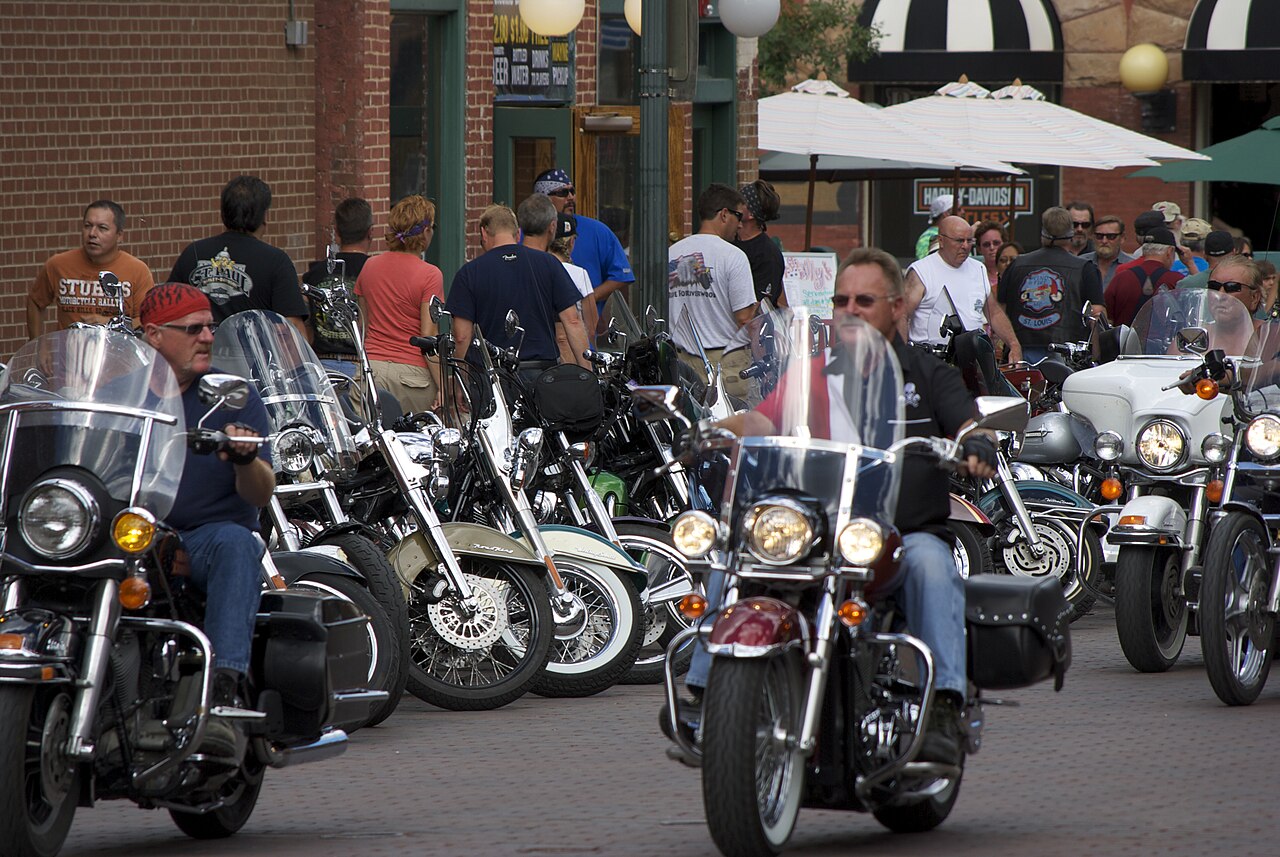
Document-based analysis by Biker Free Press. General legal information, not individualized legal advice. A charge is not a conviction, and a statutory power should not be confused with proof of guilt. Featured motorcycle photography is archival or illustrative, not a photograph of a case or an affected individual.