
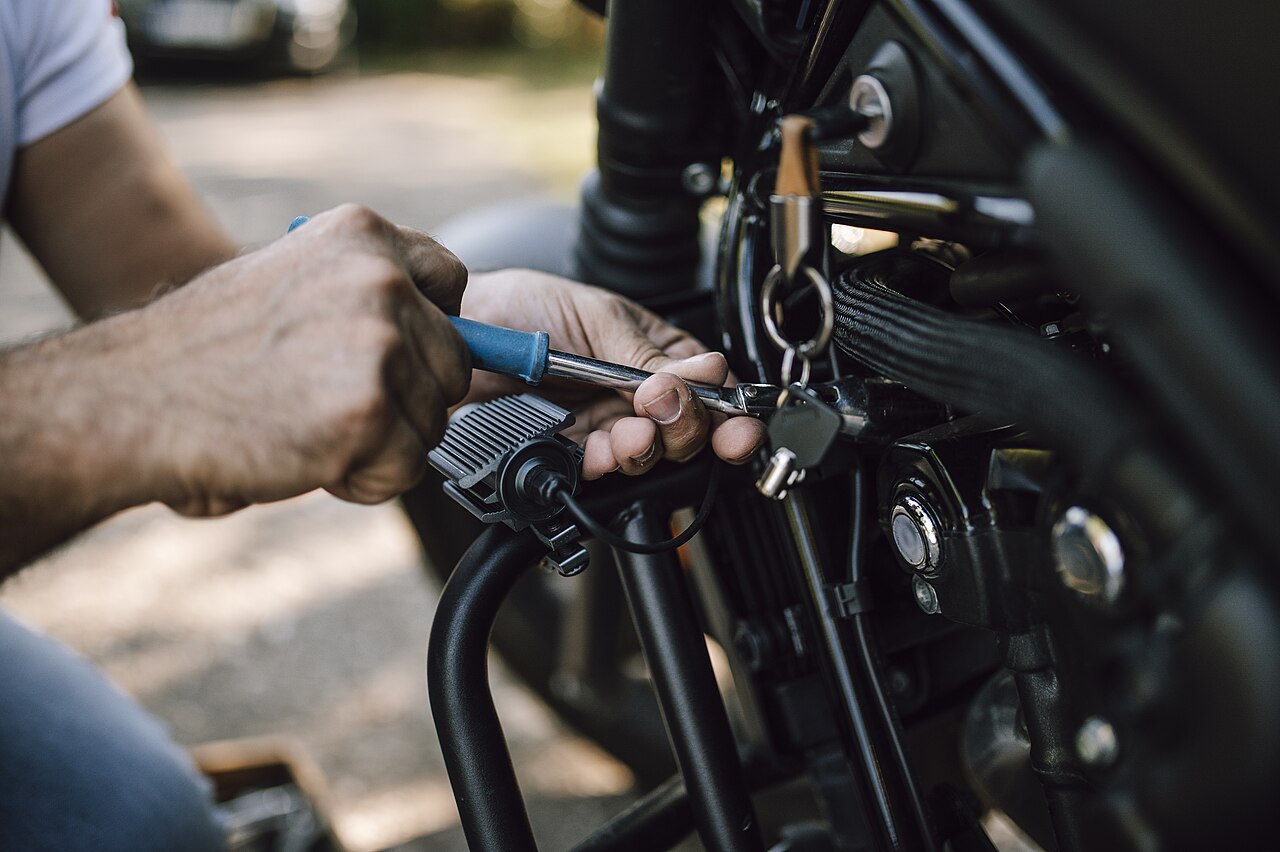
Real motorcycle mechanic at work; illustrative of independent repair, not a shop review. Photo: Shixart1985 · CC BY 2.0. Display crop applied.

A custom motorcycle is often built in the space between an owner’s imagination and a fabricator’s tools. The work goes better when that space is filled with a clear written understanding, not guesses.
Start with how the bike will really be used
Before discussing paint color or handlebar silhouette, describe the machine’s actual job. Will it be shown occasionally, ridden daily, used two-up, loaded for highway miles, or built around a particular engine? The answer informs decisions about brakes, clearance, ergonomics, electrical demands and reliability.
A responsible workshop should be able to explain compromises. A modification that looks strong in a photograph might be uncomfortable over a full day’s ride; an elaborate component may complicate roadside repair.
Put the scope in writing
List the work requested and what is expressly excluded. Identify major parts, fabrication tasks, finish work, wiring, paint, testing, and what constitutes acceptance. The estimate should distinguish expected work from diagnostic uncertainty or contingency, especially where opening an old engine can expose unknown problems.
The work order should name who supplies parts, how backorders are handled, and which special-order items cannot be returned. That avoids two people honestly remembering different conversations.
Set approval thresholds
A shop should know when it may proceed and when it must get written approval for additional labor or materials. The owner should know how changes affect both cost and completion. Photos, brief messages and signed change orders can preserve a useful record without turning every conversation into a legal contest.
Unanticipated problems are part of restoring older machinery. A written authorization process doesn’t eliminate them; it prevents uncertainty from turning into resentment.
Understand what the warranty actually covers
Ask which components are new, rebuilt, used or customer-supplied. Clarify parts warranties and labor warranties separately. A failure in a component supplied by the owner may raise different obligations from a defect in the shop’s fabrication.
Whether consumer-protection law applies to a particular transaction depends on where the parties operate; general advice here does not replace local legal guidance.
Build a file worth keeping
Keep invoices, part numbers, measurements, electrical diagrams and photographs in one folder. On a heavily customized motorcycle, those records become part of the bike’s future service history and can help the next mechanic identify what was actually done.
Biker Free Press is assembling a directory for independent builders and service providers. When we profile a shop, we will separate verifiable business details from claims that originate with an owner or customer.
Sources and methodology
This article is based on public source documents and editorial analysis, not a claimed first-hand road test or unpublished interview.
Research desk · Biker Free Press · Reviewed November 15, 2026. Verify time-sensitive requirements at the original source.