
RIGHTS DESK / ORIGINAL SOURCE ANALYSIS / NOVEMBER 2026
Riders have argued for years that wearing motorcycle clothing or riding in a group can attract unwanted scrutiny. Washington state has a distinct law that addresses motorcycle profiling in police training and departmental policy.
The precise words in RCW 43.101.419
Washington’s Revised Code says the state’s criminal justice training commission must cover motorcycle profiling in basic law-enforcement training and offer the topic to in-service officers. It also directs local agencies to add a statement condemning motorcycle profiling to existing policies on profiling.
The law defines the subject in relation to the illegal use of the fact that someone rides a motorcycle or wears motorcycle-related paraphernalia as a factor in deciding to stop, question, take enforcement action, arrest or search, with or without a proper constitutional basis.
Why this is not a blanket exemption from traffic law
The provision does not state that motorcycles cannot be stopped for lawful reasons. A rider who commits a traffic offence remains subject to the normal rules. The important question is whether an official decision rests on unlawful profiling rather than legitimate grounds.
Conversely, the existence of a traffic-law framework does not erase scrutiny of profiling. Repeated stops based merely on appearance are a serious subject for documented policy complaints and investigation.
What the law does — and doesn’t — create
The text chiefly addresses training and departmental policy. It should not be advertised as automatically awarding damages, dismissing every traffic charge or barring ordinary investigations. Separate statutes and constitutional standards may govern whether an individual has a remedy.
The practical value of citing a precise provision is that a rider can ask how the agency implements its training and policies without relying on a vague claim that all motorcycle-related stops are illegal.
Documenting an experience responsibly
A factual report should record the date, jurisdiction, agency, location, what was said and any official paperwork. Preserve relevant video if lawfully recorded, note witnesses and seek a qualified lawyer if an individual case is involved. Avoid encouraging confrontations at roadside.
Biker Free Press is interested in documented policy patterns, formal complaints, legislative responses and resulting court outcomes. We will not identify individual officers as having acted unlawfully without adequate evidence and fair context.
Why this matters to clubs and unaffiliated riders alike
The statutory definition addresses riding or apparel; it does not restrict its concern to any one motorcycle organization. An independent rider wearing a club-style vest and a club member stopped in a group both have an interest in fair enforcement.
What the source proves — and what it does not
Washington’s law directs training and policies; it does not establish an independent automatic civil remedy for every rider who believes they were profiled. The legality of a particular stop requires its facts and the applicable constitutional law.
Primary legal documents
Washington State Legislature — RCW 43.101.419
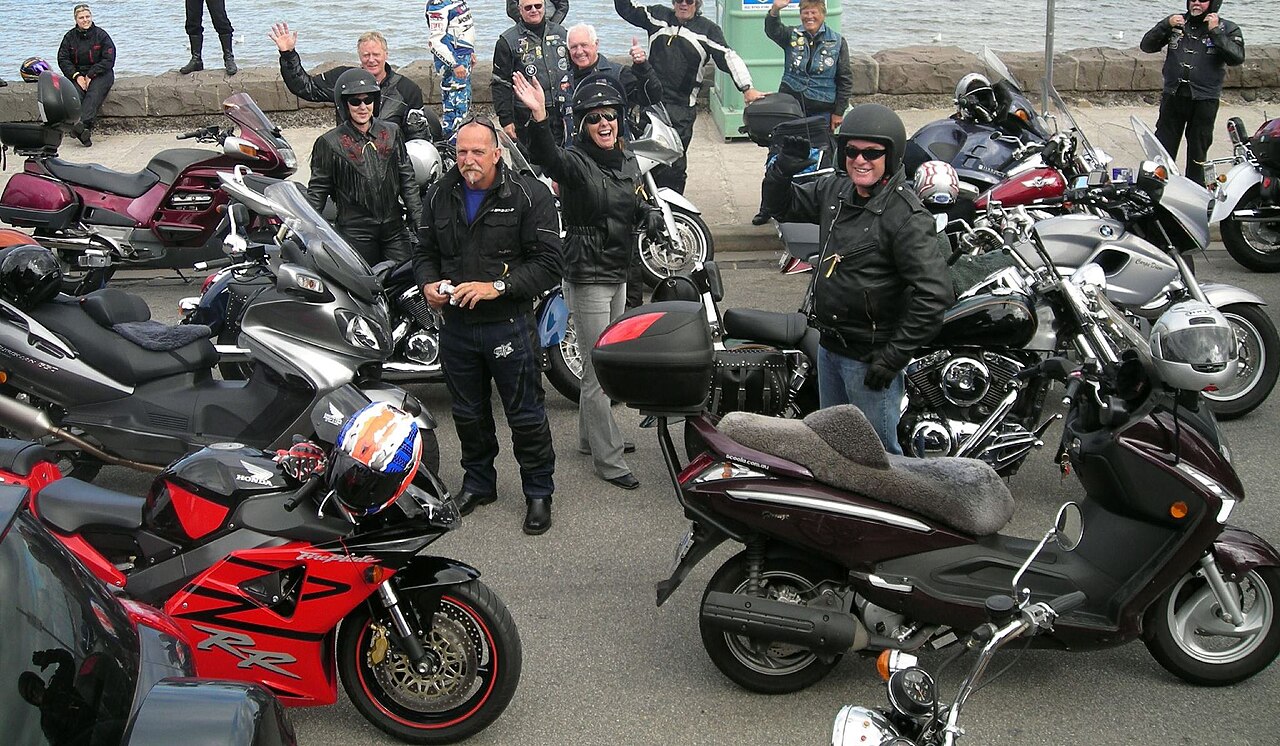
Document-based analysis by Biker Free Press. General legal information, not individualized legal advice. A charge is not a conviction, and a statutory power should not be confused with proof of guilt. Featured motorcycle photography is archival or illustrative, not a photograph of a case or an affected individual.