
Northern riders know the final ride of the season is not the end of motorcycle maintenance. A few carefully planned storage steps can reduce unpleasant surprises when the spring sun returns.
Begin with the manufacturer’s storage instructions
The model-specific owner’s manual takes priority for fuel, lubrication, battery type, cleaning products and storage position. A modern fuel-injected machine, vintage carbureted bike and a motorcycle with unusual electrical accessories may need different procedures.
Avoid a generic formula that treats every fuel system, tire and battery the same. The right plan starts with what the motorcycle actually uses.
Clean and inspect before covering
Remove road grime, salt residue and moisture, taking care around controls and sensitive connectors. Dry the motorcycle thoroughly, inspect for fluid leaks and check fasteners, tire condition and exposed metal. Address an issue while it is still fresh instead of finding it on the first spring ride.
A breathable cover in a dry, ventilated area can help manage dust and moisture. Plastic sheeting that traps condensation against a motorcycle may worsen corrosion.
Match the battery plan to the chemistry
Some batteries can be maintained using a compatible smart charger or tender designed for that chemistry; lithium, conventional lead-acid and AGM batteries do not always share charging requirements. Follow the battery and charger manufacturers’ advice before leaving anything connected unattended for months.
Disconnecting a battery may affect electronic settings or security systems. Consult the motorcycle manual before isolating it.
Think about fuel and tire loading
Follow the owner’s manual regarding fuel treatment and whether the tank should be filled or drained in storage. Where a motorcycle will sit for months, check tire pressure and consider approved wheel support or movement strategies appropriate to the machine.
Keeping a bike off damp soil and away from traffic is more useful than choosing a decorative storage setting. If storing outdoors is unavoidable, pay special attention to the weatherproofing and security measures.
The spring restart is a fresh inspection
Before riding, check battery condition, fluids, tire pressure, brakes, lights and controls. The first trip should be short enough to stop and investigate anything unusual. A clean motorcycle is not automatically a road-ready motorcycle.
Primary references
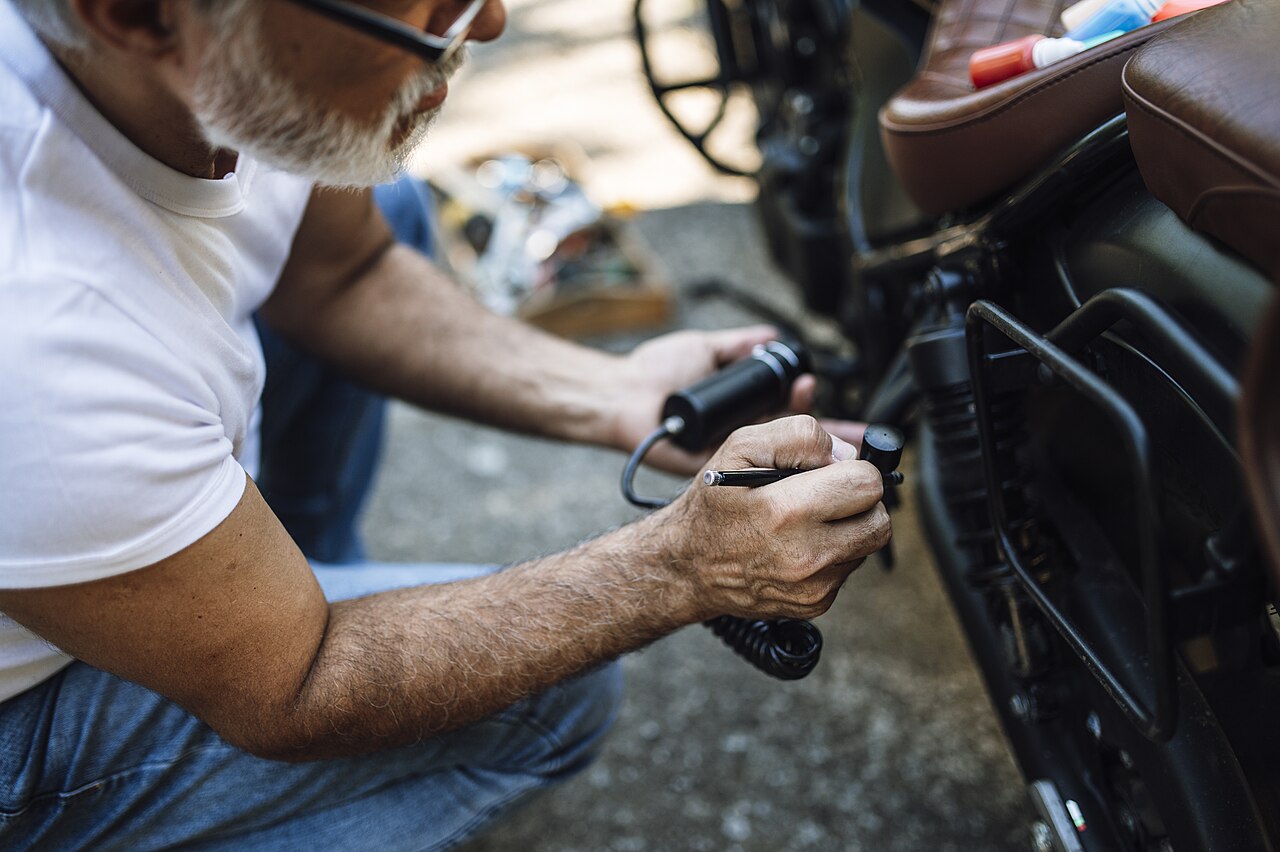
Biker Free Press guide, November 2026. This is source-based guidance, not a product road test. Featured image: Shixart1985, Wikimedia Commons, CC BY 2.0; representative/archival, not testing performed by our editors.