
BFP RIDERS’ RIGHTS RESEARCH / NOVEMBER 2026
A motorcycle club can be social, cultural and expressive at the same time. In the United States, the constitutional analysis begins with speech, assembly and the Supreme Court’s protection for expressive association, then turns to what the government actually restricted.
Association as a constitutional protection
In Roberts v. United States Jaycees (1984), the U.S. Supreme Court described the importance of people associating to pursue political, social, economic, educational, religious and cultural ends. The protection is linked to the freedoms expressly provided by the First Amendment.
A motorcycle group may share identity, community and public messages, but its constitutional position cannot be resolved simply because it calls itself a club.
Expression and membership are different inquiries
Some groups have significant expressive activities; others have commercial or social functions as well. The extent to which government regulation burdens meaningful expression matters. Even when a constitutional freedom is involved, law may sometimes impose requirements serving sufficient public interests.
Roberts itself rejected a particular associational challenge to a state anti-discrimination law. It therefore cannot fairly be quoted as a blanket Supreme Court holding that private organizations can operate however they choose.
Government action versus private venue decisions
First Amendment protections principally address government action. A private bar, restaurant or event site may have its own policies, subject to applicable laws. A decision by a private venue to reject a particular type of clothing is not automatically a federal constitutional violation.
Likewise, a police policy affecting clubs is a different question from a shopkeeper’s decision. Useful reporting identifies who imposed the restriction and under which authority.
Criminal allegations require individualized attention
The Constitution does not provide a general right to commit crimes as a group. At the same time, an allegation against a member should not be treated as proof that every person displaying related insignia is responsible. Criminal process, civil restrictions, and constitutional claims proceed under distinct legal standards.
A report about an association should document any court findings, disputed evidence and defense positions before drawing sweeping conclusions.
What we’d look for in a U.S. colors case
The actual government act, the legal forum, a challenged policy’s wording, whether expression is burdened and how a court resolved the competing claims. A photo of a patch and an uncorroborated social post cannot establish a constitutional judgment.
Editorial and legal limitations
This article describes general principles from Supreme Court precedent. Roberts concerned a membership-discrimination dispute, not a motorcycle club, and does not establish a holding about a named biker organization or a particular patch policy.
Read the original sources
Roberts v. United States Jaycees, 468 U.S. 609 (1984)
U.S. Constitution — First Amendment
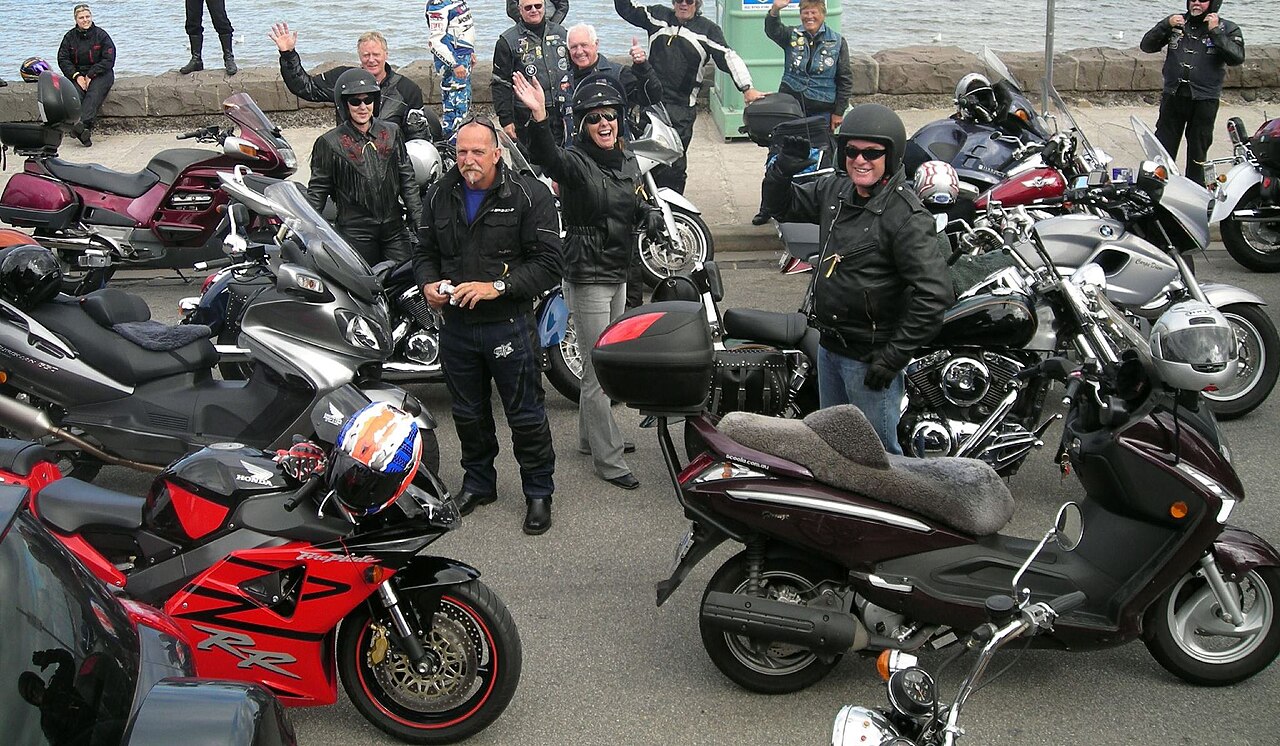
General legal information, not legal advice. Official statutory language and case circumstances control. Photographs are illustrative or historical, not evidence about an individual or legal proceeding.