HARLEY PERFORMANCE GARAGE / TECHNICAL MASTERCLASS / NOVEMBER 17, 2026
The best Harley tuner is the one that supports the actual ECU, records usable information and permits a lawful, well-validated calibration. Vance & Hines FP4, Dynojet Power Vision 4 and ThunderMax do not work the same way, and their products cannot be matched to a motorcycle simply by saying it has a Milwaukee-Eight.
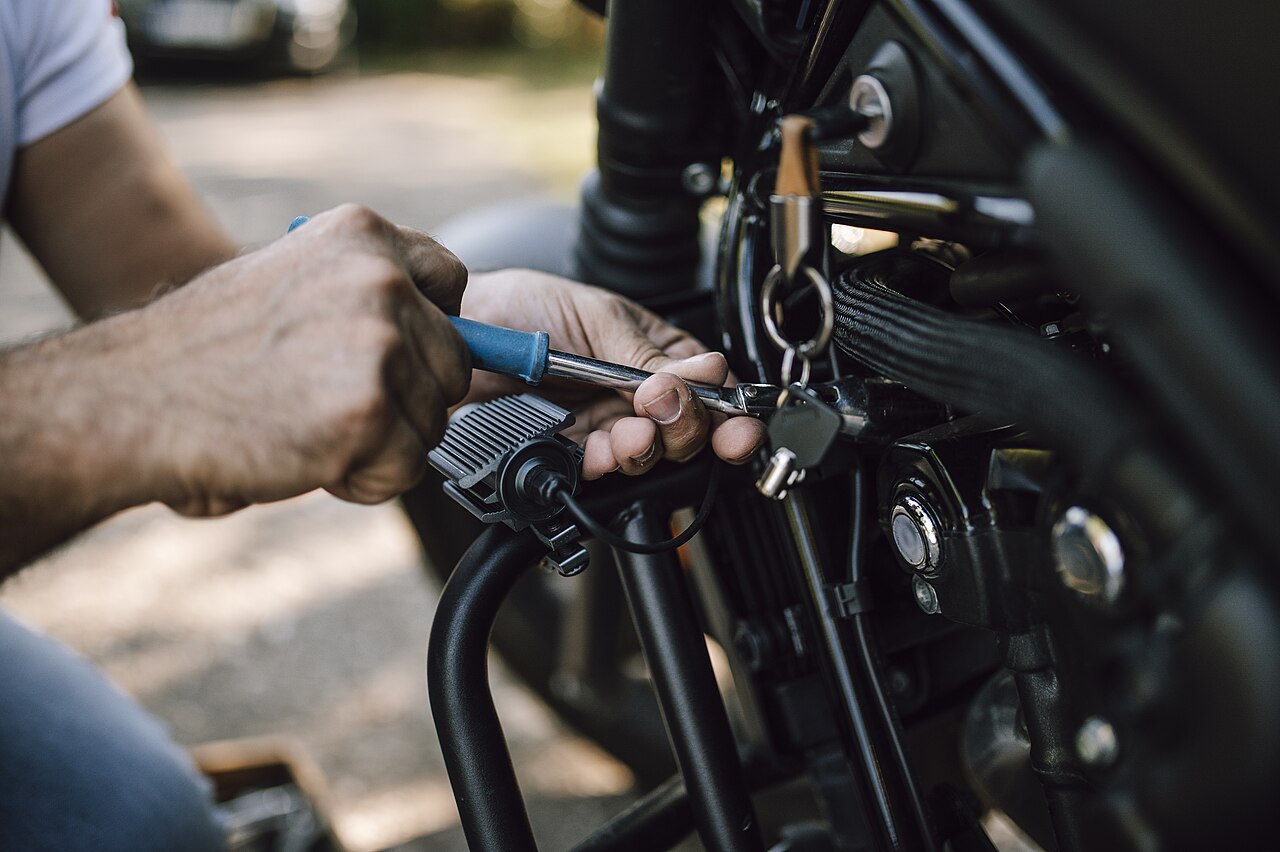
Research and technical reference, not a claim of actual parts testing or mechanical inspection by our newsroom. The featured motorcycle photograph is illustrative.
Three different operating models
FP4 is a Bluetooth-connected calibration solution for listed stock ECUs, with its current official page specifying 2007–2023 Harley applications. Dynojet sells different Power Vision 4 variants and software support for older and newer architectures, including specific Gen 2 G26 applications beginning in the 2023.5 period. ThunderMax sells replacement aftermarket ECMs that use wideband sensors and continuous closed-loop correction. None is automatically universal.
The year, ECU and engine design must match
Identify the precise motorcycle year, model code, ECU and engine/valvetrain arrangement. This is especially important for 2023.5-on redesigned Touring hardware, center-cooled models, CVO variations and VVT. A device supporting an older Touring CAN system or one EFI ECU family might not communicate with a newer G26 ECU. Manufacturer compatibility lookup should take precedence over general forum lists.
Calibration data and logging
A successful tuning process starts with mechanical health, then records a baseline, fuel type, intake, exhaust, cam, target strategy, relevant sensor data and the actual calibration. Wideband oxygen sensors can support mixture correction, but oxygen readings do not prove safe ignition timing or correct mechanical setup. Repeatable dyno or logging results should be available where performance gains are claimed.
Road legality cannot be assumed
A tuner may be physically compatible but carry restrictions for emissions-controlled public-road motorcycles. The FP4 maker’s 49-state description needs exact approved configurations. Competition-only calibrations and unlawful defeat-device functions are not transformed into legal street equipment by a disclaimer. Check EPA, CARB and local Canadian rules and the bike’s warranty documents.
How to compare total costs
Include the device, tune license, wiring, wideband accessories, professional mapping time, diagnostics, future software support and the potential cost of resetting a configuration for dealership service. Ask whether the original data can be preserved and what happens if the tool is sold or the ECU replaced.
What would make a credible review
We would compare installation and system support, calibration quality, repeatability, hot/cold behavior and real delivered torque on the same motorcycle. We have not performed such a test, and this overview does not rank one platform as objectively best.
Owner and builder checklist
- Identify exact ECU generation and model year.
- Verify official support for the chosen hardware and firmware.
- Ask how calibration is recorded, restored and validated.
- Confirm legal approval of the specific intended map.
- Compare total installed costs, updates and diagnostic support.
Primary references
- Vance & Hines Fuelpak FP4
- Dynojet Gen 2 Milwaukee-Eight guide
- ThunderMax official FAQ
- EPA defeat-device initiative
This is general information, not model-specific repair instruction. Safety-critical work requires the official service manual and competent technicians. Photo credits: BfP.