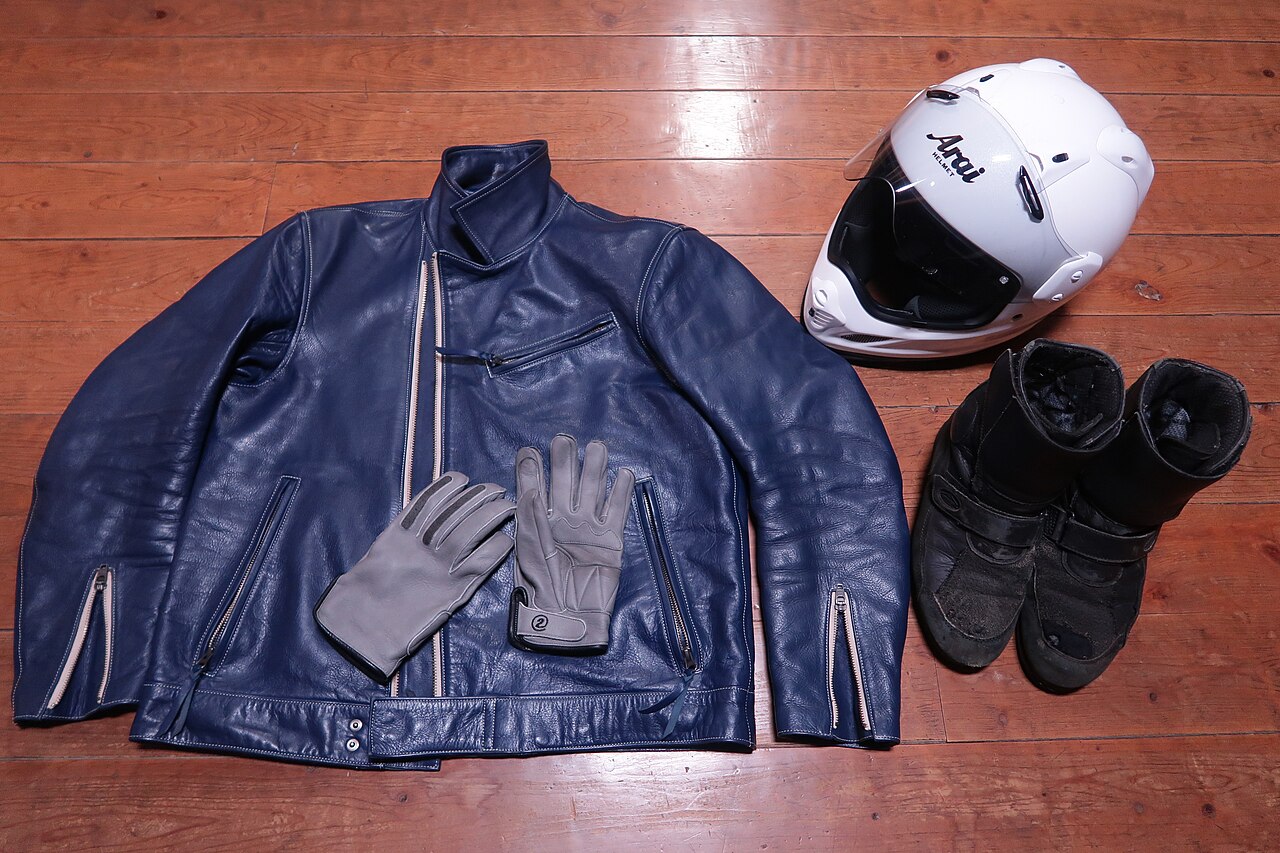
Motorcycle protective gear photograph; not a hands-on product test. Photo: サフィル · CC BY-SA 4.0. Display crop applied.

A helmet can look perfect on a shelf and still be the wrong one for your head. Fit, construction and the standard applicable where you ride deserve attention before paint or branding.
Start with head shape
Head shape varies, and manufacturers build helmets for different profiles. The U.S. National Highway Traffic Safety Administration describes round-oval, intermediate-oval and long-oval fits. A pressure point on your forehead may mean the helmet is too round; pressure at the sides can mean the shape is too oval for your head.
Measure head circumference using the maker’s sizing guidance, then try the actual helmet. It should sit level, feel evenly snug and resist rolling or shifting when you move your head. Wear it indoors for a reasonable period to identify developing pressure points.
Understand the protection tradeoffs
Full-face helmets offer a chin bar and integrated coverage, while open-face and half-helmet styles leave more of the face exposed. Modular helmets add convenience but differ in locking mechanisms and approved use. Ventilation, field of view, noise and eyewear compatibility all matter on long rides.
Know what a label actually means
In the United States, DOT-marked helmets are self-certified by the manufacturer to Federal Motor Vehicle Safety Standard No. 218. NHTSA does not individually pre-approve each model before sale. Counterfeit or misleading labels are a known concern, so buy from reputable sellers and verify product details.
Rules differ between jurisdictions, and marks such as ECE or Snell need to be understood in context rather than assumed interchangeable with local road-use requirements.
Buy for your riding reality
Think about climate, windshield turbulence, glasses, gloves, communication equipment and passenger needs. The right helmet for short urban trips may not be the best choice for all-day interstate miles.
If a helmet has been in an impact or is visibly damaged, follow the manufacturer’s replacement guidance. Never modify the protective liner to fix poor fit.
Our review policy
This is a researched buyer’s guide, not a laboratory test or personal road-test review. We do not score products we have not tested.
Sources and further reading
NHTSA — Choose the Right Motorcycle Helmet.
Published by Biker Free Press. Editorial information current to the stated publication date; verify changing regulations, product specifications and event details with primary sources.
Related product research, added November 17, 2026: Biltwell Gringo SV: ventilation, replacement shields and fit questions. This documentation-based profile complements the fit guide; it is not a hands-on helmet test.