
HARLEY PERFORMANCE GARAGE / EXHAUST / SLIP-ONS / NOVEMBER 17, 2026
Exhaust sound is one of the most personal aspects of a Harley, but a louder muffler is not automatically a meaningful performance upgrade. TAB Performance’s B.A.M. Sticks family shows how dimensions, baffles, model-year fittings and sound goals can vary within the same product name.
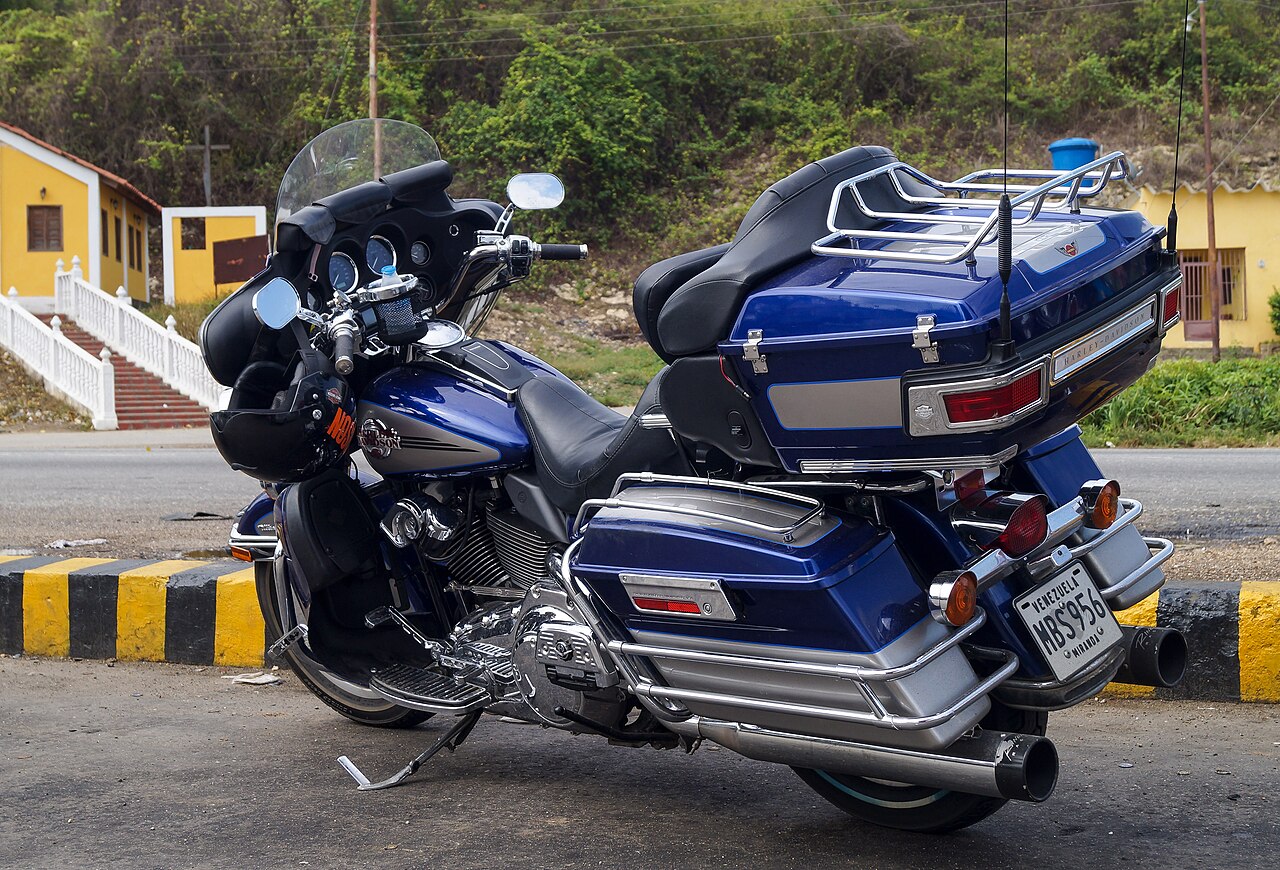
Editorial disclosure: Manufacturer-document research, not a paid endorsement or independent installation, dynamometer or road test. Featured photo is licensed, illustrative motorcycle imagery—not a photograph of the specified product.
Understanding the available choices
TAB markets several B.A.M. Sticks slip-on muffler sizes, finishes and baffle options for Harley Touring applications. Its current comparison material identifies 4.5-inch variants and choices such as a louvered or ‘Zombie’ baffle, while other products in the line have their own dimensions and compatibility rules.
A body diameter is not the same as the internal gas-flow profile or the outer tip diameter. Two mufflers with similar-looking ends may have different core geometry and may produce different backpressure and sound.
Slip-ons are not full exhaust systems
A slip-on primarily changes the muffler section downstream of the stock head pipe on compatible machines. A complete 2-into-1 system changes a much larger part of the exhaust geometry. Results with a cam, intake and fuel calibration should never be inferred from a stock-engine muffler-only test.
On some applications, catalyst hardware may be integrated into the stock system or other sections. Verify exactly which emissions-related components stay in place when the muffler is changed.
Legality is more than the manufacturer’s emissions description
TAB’s recent comparison guide describes some Touring slip-ons as emissions-compliant replacement parts. It separately cautions that this is not a sound-level certification. A product that maintains a catalyst can nevertheless exceed a local motorcycle noise limit.
Canadian riders should check provincial requirements rather than assuming U.S. 49-state or 50-state claims automatically apply. Where a rider attends motorcycle events, venue noise rules may also differ from highway law.
What a useful listening comparison requires
Record the same motorcycle, microphone location and distance, gear, engine speed and ambient conditions. Phone videos taken from different yards or different throttle positions cannot meaningfully prove relative sound level. Dyno output must likewise be compared on the same bike under similar conditions.
BfP has not installed the TAB system, measured exhaust decibels or tested horsepower changes. We treat TAB’s dimensions and technical statements as manufacturer-supplied.
Choosing the right one
Riders seeking a deeper exhaust character should first check the exact year/trim fitment, available tip shape, baffle specification, parts availability, suspension and saddlebag clearance, and whether the chosen combination meets legal limits. Compare installed price rather than headline catalog price alone.
Questions to ask before ordering
- Which exact B.A.M. Sticks SKU fits my bike?
- Is the chosen baffle street legal for my jurisdiction?
- Where is my bike’s catalyst, and will it remain intact?
- What do comparable, correctly measured sound clips show?
- Are tips, clamps and new gaskets included in the quoted price?
Road-use and safety boundaries
Fitment, software support, emissions and noise rules must be checked for the exact model and year. A product advertised for competition, or described as a performance part, is not automatically lawful for road use. In the United States, EPA prohibits unlawful tampering with emissions controls and defeat devices. In Canada, federal and provincial standards and on-road vehicle requirements must be evaluated separately. Never disable required safety functions or operate an unapproved calibration on a public road.
Primary manufacturer and regulatory references
Information checked November 17, 2026. Confirm the current instructions, manufacturer part numbers and approvals. Image credit: see the Biker Free Press photo credits.