
HARLEY PERFORMANCE GARAGE / EXHAUST / TOURING / NOVEMBER 17, 2026
Rinehart Racing offers multiple 4.5-inch Harley Touring slip-on options, including the HP45 and MotoPro45. They should not be treated as interchangeable merely because the bodies share a nominal diameter. A meaningful comparison starts with the correct model-year application and the precise muffler’s internal layout.
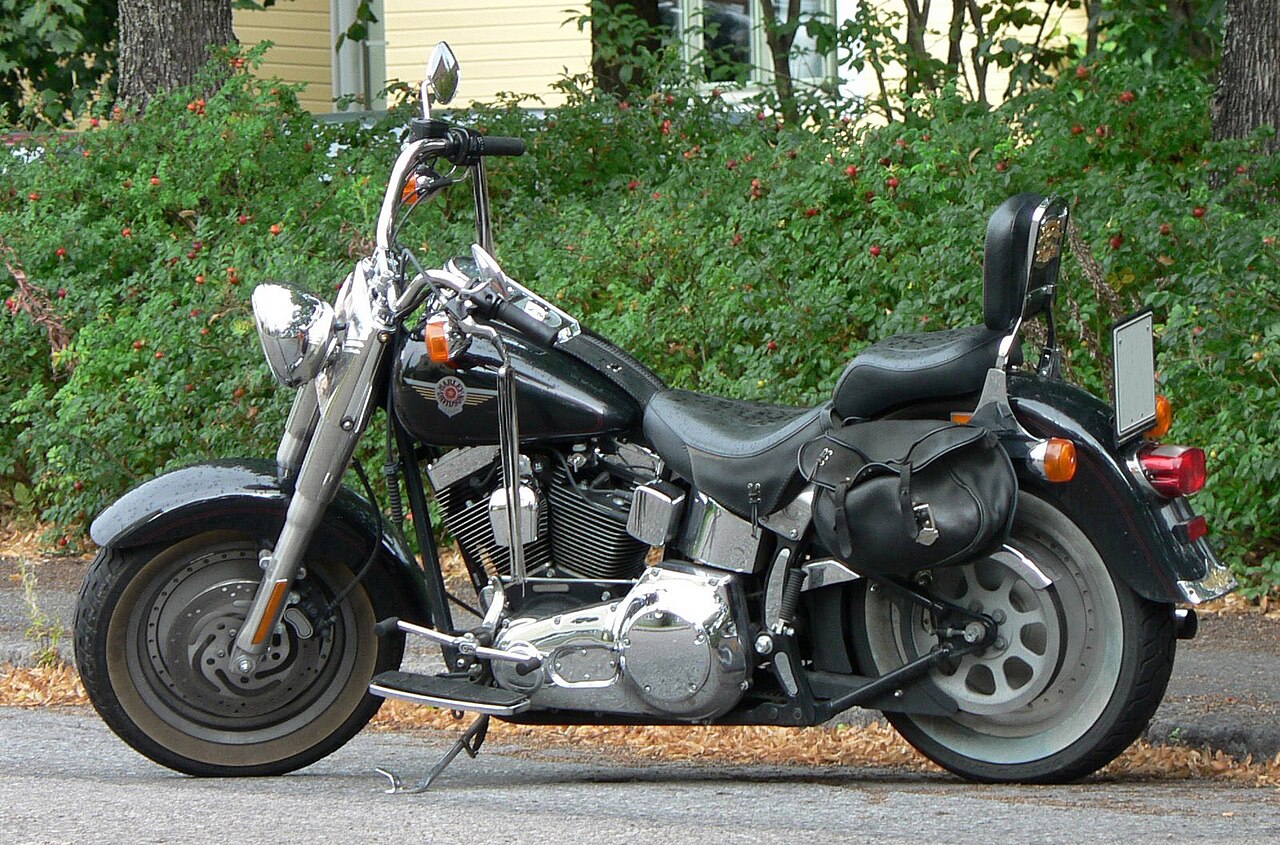
Editorial disclosure: Manufacturer-document research, not a paid endorsement or independent installation, dynamometer or road test. Featured photo is licensed, illustrative motorcycle imagery—not a photograph of the specified product.
The product family needs separation
The manufacturer’s online catalog lists distinct 4.5-inch HP45 and MotoPro45 Touring mufflers. Each carries its own product page and availability information; production year, factory header, tip geometry and intended application must be verified before ordering.
Do not assume that the same part bolts to a 2016 Twin Cam Touring bike and a redesigned 2024 CVO Road Glide. Likewise, an aftermarket header or later Touring bodywork may introduce additional clearance questions.
Sound character versus measurable output
The sound coming from a V-twin exhaust depends on engine displacement, firing sequence, cam timing, header, muffler core and throttle load. A recording made at an indoor show will not predict highway sound inside a helmet.
If an advertisement calls a slip-on ‘high performance’, ask to see the dyno setup. A claimed peak difference can appear without meaningful extra torque in the 2,000–4,000 rpm range that a loaded cruiser routinely uses.
Questions about fuel calibration
An exhaust change can alter fueling needs depending on the engine and the full system. On a stock touring bike retaining emissions components, required work may differ from an extensively modified high-compression build. A reputable shop should assess the actual hardware and applicable operating requirements.
Never buy a tuner solely because a muffler salesperson claims one is always required or never required for every Harley year.
Installation and service
Check mounting bracket compatibility, side-case/heat-shield clearance, passenger contact points, seal integrity and acceptable noise. Preserve all required factory emissions components. Recheck mounting hardware in accordance with manufacturer instructions after initial use.
Future servicing matters: verify the availability of end caps, baffles or replacement components for the exact version.
Independent review status
BfP has not compared HP45 and MotoPro45 on the same motorcycle. This profile outlines the decision and evidence a buyer should require and does not award a sound, quality or horsepower winner without a real test.
Questions to ask before ordering
- Compare the exact HP45 and MotoPro45 model codes.
- Confirm the maker’s fitment chart for year/trim.
- Request consistent real sound and dyno comparisons.
- Evaluate legal noise and emissions requirements.
- Confirm mounting accessories and replacement parts.
Road-use and safety boundaries
Fitment, software support, emissions and noise rules must be checked for the exact model and year. A product advertised for competition, or described as a performance part, is not automatically lawful for road use. In the United States, EPA prohibits unlawful tampering with emissions controls and defeat devices. In Canada, federal and provincial standards and on-road vehicle requirements must be evaluated separately. Never disable required safety functions or operate an unapproved calibration on a public road.
Primary manufacturer and regulatory references
Information checked November 17, 2026. Confirm the current instructions, manufacturer part numbers and approvals. Image credit: see the Biker Free Press photo credits.