HARLEY PERFORMANCE GARAGE / ENGINE MANAGEMENT / REPLACEMENT ECM / NOVEMBER 17, 2026
ThunderMax takes a different approach from a phone-operated factory-ECU flash tuner: on supported Harley-Davidson EFI models, it replaces the engine control module and uses wideband oxygen sensors to make fueling corrections within its strategy. The method is technically interesting, but application-specific legality, fitment, calibration and integration matter enormously.
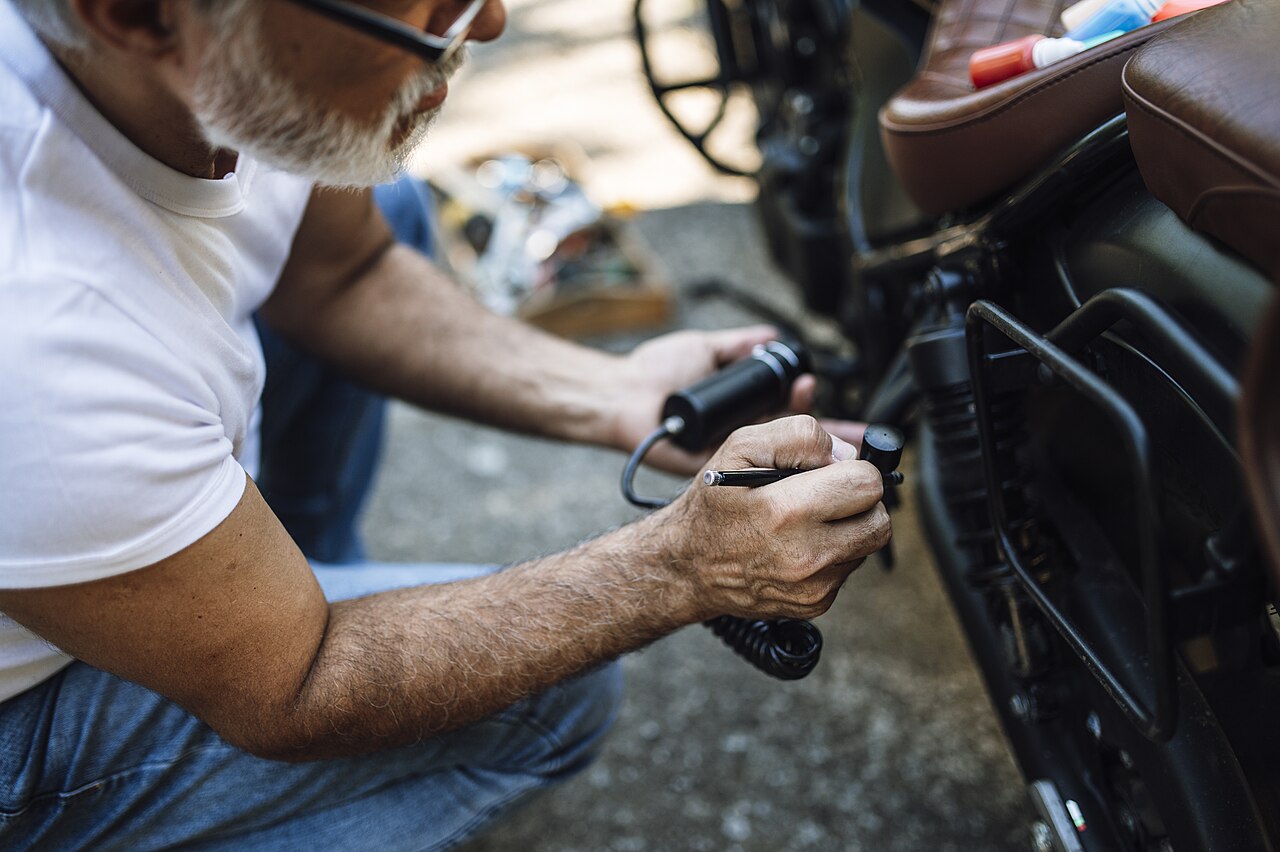
Editorial disclosure: Manufacturer-document research, not a paid endorsement or independent installation, dynamometer or road test. Featured photo is licensed, illustrative motorcycle imagery—not a photograph of the specified product.
Replacement control versus flashed factory control
ThunderMax describes an aftermarket ECM employing wideband oxygen sensor feedback and a proprietary control algorithm. Its FAQ explains that the system utilizes Bosch 18mm wideband sensors and continuously applies fuel correction in response to operating conditions.
A complete aftermarket ECM is not merely an accessory screen. Factory functions such as dash communications, security/immobilizer behavior, cruise functions, heat management and diagnostics must be assessed for each compatible Harley and firmware version. Never infer that support for one model-year generation applies to a redesigned ECU architecture.
What AutoTune can and cannot promise
Closed-loop fuel correction responds to measured oxygen content and a target mixture strategy. It does not independently validate mechanical engine condition, confirm correct cam timing or solve intake leaks, weak injectors, failing sensors or an unsuitable exhaust. Ignition timing, throttle control and engine protection remain critical aspects of a calibration.
An incorrectly selected base map can still produce problems before sufficient correction. Use the manufacturer’s prescribed map selection, wiring and diagnostic processes and obtain experienced help for altered engines.
A 2025-up product exists, but verify exact variants
ThunderMax lists a distinct replacement ECM for 2025-up Softail applications and separate product catalogs for earlier Touring, Softail, Dyna and CVO generations. There is no universal plug-in product that automatically supports every Harley ECU, VVT valve system or electronic control feature.
Record the VIN-derived model configuration and compare it with the latest fitment chart; check whether the manufacturer has released firmware, wiring or service notes for the specific motorcycle.
Road-use and mechanical constraints
EPA emissions requirements, regional inspection rules and warranty documents remain relevant when replacing a certified factory engine controller. Competition use marketing is not itself a waiver. A project bike should be distinguished clearly from a street motorcycle.
Also assess oxygen sensor bung sizes, exhaust position, harness routing, ground quality, heat and water exposure. A replacement ECM’s dependability depends on its connections as much as its software.
How a real evaluation would work
A future BfP test should compare starting, hot idle, cruising temperature, throttle changes, controlled dyno results and the time needed for the learning strategy to converge. Any marketing claim such as ‘self-tunes every build’ should be treated as an unverified simplification until tested under defined conditions.
Questions to ask before ordering
- Does the specific ThunderMax ECU fit my exact model, year and electronic system?
- Are sensors, harnesses and mountings included?
- Does the system retain required stock functions?
- Is the proposed road-use configuration compliant?
- What logs or baseline tests support a claimed improvement?
Road-use and safety boundaries
Fitment, software support, emissions and noise rules must be checked for the exact model and year. A product advertised for competition, or described as a performance part, is not automatically lawful for road use. In the United States, EPA prohibits unlawful tampering with emissions controls and defeat devices. In Canada, federal and provincial standards and on-road vehicle requirements must be evaluated separately. Never disable required safety functions or operate an unapproved calibration on a public road.
Primary manufacturer and regulatory references
- ThunderMax official FAQ — wideband AutoTune basics
- ThunderMax — ECM for 2025-up Softail models
- ThunderMax — platform technology overview
Information checked November 17, 2026. Confirm the current instructions, manufacturer part numbers and approvals. Image credit: see the Biker Free Press photo credits.